

The latest news on business and economy
Provided by AGP
PET Bottle Manufacturing Plant Setup, Feasibility Study, ROI Analysis and Business Plan Consultant
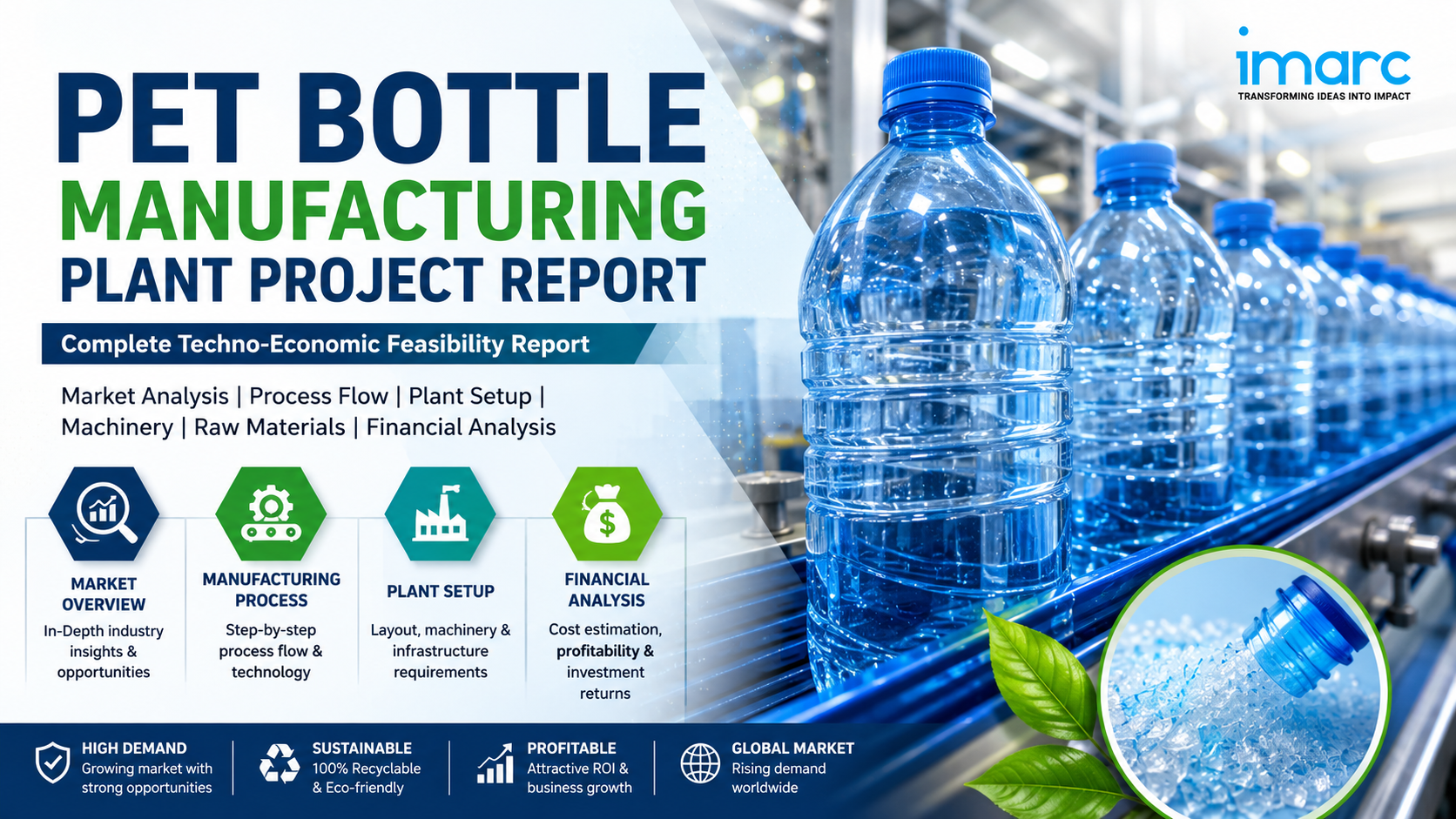
A Detailed DPR Covering CapEx, OpEx, Injection Stretch Blow Molding Process, ROI, Global Opportunity in Beverage, Pharmaceutical, Personal Care PET Packaging
BROOKLYN, NY, UNITED STATES, May 19, 2026 /EINPresswire.com/ -- Setting up a PET bottle manufacturing plant gives you access to the most widely used rigid packaging format in the global FMCG, beverage, and pharmaceutical supply chain. Polyethylene terephthalate bottles are light, shatterproof, food-safe, and recyclable - properties that have made them the default replacement for glass across virtually every liquid packaging application. India’s FMCG sector, rising urban consumption of packaged beverages, and the expansion of organised retail and e-commerce are all accelerating PET packaging demand. FMCG and beverage companies increasingly prefer local PET bottle suppliers over imports to gain flexibility, lower logistics costs, and better responsiveness to brand-specific mould requirements.IMARC Group’s PET Bottle Manufacturing Plant Project Report is a complete DPR and PET bottle manufacturing feasibility study for packaging investors, FMCG entrepreneurs, and project developers. It covers the full PET bottle manufacturing plant setup using ISBM - from PET resin drying and injection moulding of preforms through stretch blow moulding, cooling, leak testing, and palletised dispatch - with complete PET bottle plant CapEx and OpEx modelling and 10-year financial projections.
𝐑𝐞𝐪𝐮𝐞𝐬𝐭 𝐟𝐨𝐫 𝐚 𝐒𝐚𝐦𝐩𝐥𝐞 𝐑𝐞𝐩𝐨𝐫𝐭: https://www.imarcgroup.com/pet-bottle-manufacturing-plant-project-report/requestsample
𝐈𝐧𝐯𝐞𝐬𝐭𝐦𝐞𝐧𝐭 𝐃𝐫𝐢𝐯𝐞𝐫𝐬 𝐚𝐧𝐝 𝐌𝐚𝐫𝐤𝐞𝐭 𝐎𝐩𝐩𝐨𝐫𝐭𝐮𝐧𝐢𝐭𝐲
Three forces are driving consistent expansion in PET bottle demand across India and globally:
𝐁𝐞𝐯𝐞𝐫𝐚𝐠𝐞 𝐚𝐧𝐝 𝐅𝐌𝐂𝐆 𝐬𝐞𝐜𝐭𝐨𝐫 𝐠𝐫𝐨𝐰𝐭𝐡 𝐜𝐫𝐞𝐚𝐭𝐢𝐧𝐠 𝐛𝐚𝐬𝐞𝐥𝐨𝐚𝐝 𝐝𝐞𝐦𝐚𝐧𝐝: Packaged drinking water, CSD, juices, and ready-to-drink beverages are the primary PET volume drivers. India’s FMCG sector recorded 7.5% volume growth in Q2 2023 - the highest in eight quarters - driven by rural recovery and modern trade expansion. Every new beverage SKU launch or bottled water scheme procurement creates incremental PET bottle demand.
𝐋𝐨𝐜𝐚𝐥𝐢𝐬𝐚𝐭𝐢𝐨𝐧 𝐩𝐫𝐞𝐟𝐞𝐫𝐞𝐧𝐜𝐞 𝐛𝐲 𝐅𝐌𝐂𝐆 𝐚𝐧𝐝 𝐩𝐡𝐚𝐫𝐦𝐚𝐜𝐞𝐮𝐭𝐢𝐜𝐚𝐥 𝐛𝐮𝐲𝐞𝐫𝐬: FMCG and beverage companies are shifting to local PET bottle suppliers for shorter lead times, just-in-time delivery, and faster mould changeovers - advantages imports cannot offer. The pharmaceutical sector’s preference for domestically certified bottles for liquid medicines and health supplements adds a high-specification demand channel.
𝐒𝐮𝐬𝐭𝐚𝐢𝐧𝐚𝐛𝐢𝐥𝐢𝐭𝐲 𝐦𝐚𝐧𝐝𝐚𝐭𝐞𝐬 𝐝𝐫𝐢𝐯𝐢𝐧𝐠 𝐫𝐏𝐄𝐓 𝐚𝐝𝐨𝐩𝐭𝐢𝐨𝐧: India’s EPR framework requires progressive recycled content in plastic packaging. LNJ GreenPET signed an MoU with Sumitomo for rPET collaboration (September 2025). Amcor launched a 100% post-consumer recycled CSD bottle (April 2024). Manufacturers investing in rPET and light weighting are best positioned for the next decade of compliance.
𝐏𝐄𝐓 𝐁𝐨𝐭𝐭𝐥𝐞 𝐓𝐲𝐩𝐞𝐬 𝐚𝐧𝐝 𝐏𝐫𝐨𝐝𝐮𝐜𝐭 𝐑𝐚𝐧𝐠𝐞
A PET bottle production plant’s product portfolio spans multiple end markets, each requiring distinct mould specifications and resin grades:
• 𝐒𝐭𝐢𝐥𝐥 𝐰𝐚𝐭𝐞𝐫 𝐛𝐨𝐭𝐭𝐥𝐞𝐬 (𝟐𝟓𝟎 𝐦𝐥 - 𝟐𝟎 𝐋): The largest volume segment. Lightest gram weight, commodity pricing. Ultra-thin 500 ml and 1 L formats for FMCG supply; 20 L jars for home delivery. High throughput, low per-unit margin.
• 𝐂𝐚𝐫𝐛𝐨𝐧𝐚𝐭𝐞𝐝 𝐬𝐨𝐟𝐭 𝐝𝐫𝐢𝐧𝐤 (𝐂𝐒𝐃) 𝐛𝐨𝐭𝐭𝐥𝐞𝐬: Pressure-rated design for CO₂ containment. Thicker base and heavier gram weight than water bottles. Standard 250 ml, 500 ml, 1.25 L, and 2 L formats matched to major brand filler specifications.
• 𝐇𝐨𝐭-𝐟𝐢𝐥𝐥 𝐚𝐧𝐝 𝐣𝐮𝐢𝐜𝐞 𝐛𝐨𝐭𝐭𝐥𝐞𝐬: Withstand filling at 85-90°C. Structural ribbing compensates for post-fill vacuum. Used for juices, teas, and nutritional beverages. Higher resin quality than ambient-fill formats.
• 𝐏𝐡𝐚𝐫𝐦𝐚𝐜𝐞𝐮𝐭𝐢𝐜𝐚𝐥 𝐚𝐧𝐝 𝐧𝐮𝐭𝐫𝐚𝐜𝐞𝐮𝐭𝐢𝐜𝐚𝐥 𝐛𝐨𝐭𝐭𝐥𝐞𝐬: Amber or white bottles for medicines, syrups, and supplements. GMP environment, traceability, and BIS certification required. A PET packaging manufacturing plant serving pharma earns significant per-unit premium over beverage grades.
• 𝐏𝐞𝐫𝐬𝐨𝐧𝐚𝐥 𝐜𝐚𝐫𝐞 𝐚𝐧𝐝 𝐜𝐨𝐬𝐦𝐞𝐭𝐢𝐜𝐬 𝐛𝐨𝐭𝐭𝐥𝐞𝐬: Shampoo, lotion, and body wash bottles with brand-specific moulds. Higher gross margin per piece than water. Custom tooling investment is the market entry barrier.
• 𝐅𝐨𝐨𝐝-𝐠𝐫𝐚𝐝𝐞 𝐣𝐚𝐫𝐬 𝐚𝐧𝐝 𝐜𝐨𝐧𝐭𝐚𝐢𝐧𝐞𝐫𝐬: Wide-mouth jars for cooking oil, condiments, honey, and dry snacks. Food-contact grade resin and tamper-evident closure compatibility required.
𝐏𝐄𝐓 𝐁𝐨𝐭𝐭𝐥𝐞 𝐌𝐚𝐧𝐮𝐟𝐚𝐜𝐭𝐮𝐫𝐢𝐧𝐠 𝐏𝐥𝐚𝐧𝐭 𝐅𝐞𝐚𝐬𝐢𝐛𝐢𝐥𝐢𝐭𝐲 𝐑𝐞𝐩𝐨𝐫𝐭: https://www.imarcgroup.com/pet-bottle-manufacturing-plant-project-report
𝐇𝐨𝐰 𝐚 𝐏𝐄𝐓 𝐁𝐨𝐭𝐭𝐥𝐞 𝐌𝐚𝐧𝐮𝐟𝐚𝐜𝐭𝐮𝐫𝐢𝐧𝐠 𝐏𝐥𝐚𝐧𝐭 𝐖𝐨𝐫𝐤𝐬 - 𝐓𝐡𝐞 𝐈𝐧𝐣𝐞𝐜𝐭𝐢𝐨𝐧 𝐒𝐭𝐫𝐞𝐭𝐜𝐡 𝐁𝐥𝐨𝐰 𝐌𝐨𝐮𝐥𝐝𝐢𝐧𝐠 𝐏𝐫𝐨𝐜𝐞𝐬𝐬
PET bottle manufacturing uses a two-step injection stretch blow moulding (ISBM) process. The preform is produced first in an injection moulding step, then reheated and blown into the final bottle shape in a separate stretch blow moulding step:
• 𝐏𝐄𝐓 𝐫𝐞𝐬𝐢𝐧 𝐝𝐫𝐲𝐢𝐧𝐠: Resin must be dried below 50 ppm moisture at 160-175°C for 4-6 hours. Residual moisture causes hydrolytic degradation, reducing clarity and mechanical strength
• 𝐏𝐫𝐞𝐟𝐨𝐫𝐦 𝐢𝐧𝐣𝐞𝐜𝐭𝐢𝐨𝐧 𝐦𝐨𝐮𝐥𝐝𝐢𝐧𝐠: Dried resin is injected at 280-290°C into multi-cavity moulds (8-128 cavities). The preform has the final neck geometry and thread finish. Cavity count directly determines machine output
• 𝐏𝐫𝐞𝐟𝐨𝐫𝐦 𝐜𝐨𝐨𝐥𝐢𝐧𝐠 𝐚𝐧𝐝 𝐬𝐭𝐨𝐫𝐚𝐠𝐞: Preforms are cooled, ejected, and inspected. They can be stored for days or weeks before blowing - a key flexibility advantage of the two-step process
• 𝐏𝐫𝐞𝐟𝐨𝐫𝐦 𝐫𝐞𝐡𝐞𝐚𝐭𝐢𝐧𝐠: Preforms pass through infrared oven banks on rotating mandrels. Selective heating profiles control material distribution for base strength, sidewall clarity, and neck integrity
• 𝐒𝐭𝐫𝐞𝐭𝐜𝐡 𝐛𝐥𝐨𝐰 𝐦𝐨𝐮𝐥𝐝𝐢𝐧𝐠: A stretch rod extends the preform axially while high-pressure air (30-40 bar) expands it radially. Biaxial orientation of PET molecules creates the clarity, impact resistance, and gas barrier that distinguish ISBM bottles
• 𝐁𝐨𝐭𝐭𝐥𝐞 𝐜𝐨𝐨𝐥𝐢𝐧𝐠 𝐚𝐧𝐝 𝐝𝐞𝐦𝐨𝐮𝐥𝐝𝐢𝐧𝐠: Bottles are cooled briefly in the mould before demoulding. Cooling time is a key determinant of cycle time and output rate
• 𝐋𝐞𝐚𝐤 𝐭𝐞𝐬𝐭𝐢𝐧𝐠 𝐚𝐧𝐝 𝐪𝐮𝐚𝐥𝐢𝐭𝐲 𝐢𝐧𝐬𝐩𝐞𝐜𝐭𝐢𝐨𝐧: Bottles are tested for leaks under pressure, checked for dimensional accuracy (weight, height, diameter, top-load strength), and inspected visually. Defective bottles are crushed and returned as regrind
• 𝐏𝐚𝐥𝐥𝐞𝐭𝐢𝐬𝐢𝐧𝐠 𝐚𝐧𝐝 𝐝𝐢𝐬𝐩𝐚𝐭𝐜𝐡: Approved bottles are conveyed to an automatic palletiser and stretch-wrapped on pallets for transport to customer filling lines. Bottles can also be packed loose in lined bulk bins for high-volume beverage customers
𝐏𝐥𝐚𝐧𝐭 𝐈𝐧𝐯𝐞𝐬𝐭𝐦𝐞𝐧𝐭 𝐄𝐜𝐨𝐧𝐨𝐦𝐢𝐜𝐬
𝐏𝐫𝐨𝐝𝐮𝐜𝐭𝐢𝐨𝐧 𝐂𝐚𝐩𝐚𝐜𝐢𝐭𝐲:
• The proposed manufacturing facility is designed with an annual production capacity ranging between 100 - 300 million pieces, enabling economies of scale while maintaining operational flexibility
𝐏𝐫𝐨𝐟𝐢𝐭𝐚𝐛𝐢𝐥𝐢𝐭𝐲 𝐁𝐞𝐧𝐜𝐡𝐦𝐚𝐫𝐤𝐬:
• Gross Profit: 25-35%
• Net Profit: 10-15% after financing costs, depreciation, and taxes
𝐎𝐩𝐞𝐫𝐚𝐭𝐢𝐧𝐠 𝐂𝐨𝐬𝐭 (𝐎𝐩𝐄𝐱) 𝐁𝐫𝐞𝐚𝐤𝐝𝐨𝐰𝐧:
• Raw Materials (PET resin): 70-80% of total OpEx. PET resin is a petroleum-derived commodity with prices linked to MEG and PTA feedstock costs - hedging and long-term supply contracts are the primary tools for managing this exposure
• Utilities: 10-15% of OpEx - injection moulding and compressed air for stretch blowing are the primary energy consumers
𝐏𝐄𝐓 𝐁𝐨𝐭𝐭𝐥𝐞 𝐏𝐥𝐚𝐧𝐭 𝐂𝐚𝐩𝐄𝐱 𝐂𝐨𝐦𝐩𝐨𝐧𝐞𝐧𝐭𝐬:
• 𝐋𝐚𝐧𝐝 𝐚𝐧𝐝 𝐟𝐚𝐜𝐭𝐨𝐫𝐲: resin storage area, crystalliser-dryer room, injection moulding hall, stretch blow moulding hall, quality inspection area, palletising bay, finished goods warehouse
• 𝐂𝐨𝐫𝐞 𝐩𝐫𝐨𝐜𝐞𝐬𝐬 𝐞𝐪𝐮𝐢𝐩𝐦𝐞𝐧𝐭: PET resin crystalliser-dryer, injection moulding machine(s) with multi-cavity preform moulds, infrared reheat stretch blow moulding machine(s), high-pressure air compressor system
• 𝐐𝐮𝐚𝐥𝐢𝐭𝐲 𝐚𝐧𝐝 𝐭𝐞𝐬𝐭𝐢𝐧𝐠: top-load tester, leak tester, wall thickness gauge, visual inspection station
• 𝐔𝐭𝐢𝐥𝐢𝐭𝐢𝐞𝐬: chiller for mould cooling, compressed air system (high-pressure for blowing, low-pressure for ancillary), power supply for high-tonnage injection moulding machines
• 𝐏𝐫𝐞-𝐨𝐩𝐞𝐫𝐚𝐭𝐢𝐯𝐞 𝐜𝐨𝐬𝐭𝐬: BIS IS 14971, FSSAI clearance, EPR registration; mould tooling is the largest variable in PET bottle production plant investment for custom shapes; initial resin inventory required
𝐒𝐩𝐞𝐚𝐤 𝐭𝐨 𝐀𝐧𝐚𝐥𝐲𝐬𝐭 𝐟𝐨𝐫 𝐂𝐮𝐬𝐭𝐨𝐦𝐢𝐳𝐞𝐝 𝐑𝐞𝐩𝐨𝐫𝐭: https://www.imarcgroup.com/request?type=report&id=7302&flag=C
𝐆𝐥𝐨𝐛𝐚𝐥 𝐌𝐚𝐫𝐤𝐞𝐭 𝐚𝐧𝐝 𝐑𝐞𝐠𝐢𝐨𝐧𝐚𝐥 𝐃𝐞𝐦𝐚𝐧𝐝
The global PET bottle market, valued at USD 46.96 billion in 2025, is projected to reach USD 62.35 billion by 2034 at a CAGR of 3.2%. Asia Pacific leads global consumption, driven by large bottled water and beverage markets in China, India, and Southeast Asia.
𝐈𝐧𝐝𝐢𝐚: The India PET bottle market was valued at USD 1.6 billion in 2025 and is projected to reach USD 2.2 billion by 2034 at a CAGR of 3.57%. Key demand drivers include packaged drinking water procurement, CSD and juice brand launches, pharmaceutical liquid packaging, and personal care FMCG growth. LNJ GreenPET’s MoU with Sumitomo for rPET collaboration (September 2025) signals active investment in the sustainability transition. Key Indian manufacturers include Manjushree Technopack, Mold-Tek Packaging, Uflex, and a large network of regional MSME bottle producers.
𝐀𝐬𝐢𝐚 𝐏𝐚𝐜𝐢𝐟𝐢𝐜: The largest and fastest-growing region. China dominates production and consumption. India, Vietnam, Indonesia, and the Philippines are high-growth markets driven by urbanisation, packaged water adoption, and FMCG expansion. Local bottle manufacturers across the region benefit from proximity to high-growth beverage customers.
𝐍𝐨𝐫𝐭𝐡 𝐀𝐦𝐞𝐫𝐢𝐜𝐚 𝐚𝐧𝐝 𝐄𝐮𝐫𝐨𝐩𝐞: Mature markets with stable demand and increasing regulatory focus on rPET content and lightweighting. ALPLA commissioned a 35,000 MT/year rPET facility in South Africa (2025). In January 2025, PTI and DePoly announced a closed-loop recycled PET bottle partnership. Sustainability compliance is reshaping CapEx priorities in these regions toward recycling infrastructure.
𝐌𝐢𝐝𝐝𝐥𝐞 𝐄𝐚𝐬𝐭 𝐚𝐧𝐝 𝐀𝐟𝐫𝐢𝐜𝐚: Bottled water demand is structurally high due to water scarcity and infrastructure limitations. Young, urbanising populations are driving packaged beverage growth. FMCG multinational expansion into these markets is creating demand for local PET bottle supply.
𝐒𝐢𝐭𝐞 𝐒𝐞𝐥𝐞𝐜𝐭𝐢𝐨𝐧 𝐚𝐧𝐝 𝐏𝐨𝐥𝐢𝐜𝐲 𝐒𝐮𝐩𝐩𝐨𝐫𝐭
Location decisions for a PET bottle plant setup directly affect resin supply, customer access, and logistics economics:
• 𝐏𝐫𝐨𝐱𝐢𝐦𝐢𝐭𝐲 𝐭𝐨 𝐫𝐞𝐬𝐢𝐧 𝐬𝐮𝐩𝐩𝐥𝐲: PET resin at 70-80% of OpEx must be sourced reliably. India’s major PET resin producers are concentrated in Gujarat (Reliance Industries, JBF Industries). Plants near Surat, Vadodara, or Ahmedabad access the lowest resin logistics cost and shortest delivery lead time
• 𝐏𝐫𝐨𝐱𝐢𝐦𝐢𝐭𝐲 𝐭𝐨 𝐅𝐌𝐂𝐆 𝐚𝐧𝐝 𝐛𝐞𝐯𝐞𝐫𝐚𝐠𝐞 𝐜𝐮𝐬𝐭𝐨𝐦𝐞𝐫𝐬: PET bottles are bulky and expensive to transport relative to their value. A plant within 200-400 km of major beverage filling plants, FMCG manufacturing clusters, or pharmaceutical production zones minimises outbound freight and enables just-in-time delivery commitments
• 𝐈𝐧𝐝𝐮𝐬𝐭𝐫𝐢𝐚𝐥 𝐞𝐬𝐭𝐚𝐭𝐞𝐬 𝐰𝐢𝐭𝐡 𝐩𝐨𝐰𝐞𝐫 𝐫𝐞𝐥𝐢𝐚𝐛𝐢𝐥𝐢𝐭𝐲: Injection moulding machines are high-tonnage equipment with large connected loads. Industrial zones with guaranteed power supply and transformer capacity reduce the risk of production interruption and associated wastage of in-process PET resin
• 𝐄𝐏𝐑 𝐜𝐨𝐦𝐩𝐥𝐢𝐚𝐧𝐜𝐞 𝐢𝐧𝐟𝐫𝐚𝐬𝐭𝐫𝐮𝐜𝐭𝐮𝐫𝐞: India’s EPR (Extended Producer Responsibility) framework requires plastic packaging producers to register, track, and recycle or offset their plastic output. Plants co-located with or contracted to rPET recyclers improve compliance cost and reduce EPR certificate procurement expenditure
• 𝐆𝐨𝐯𝐞𝐫𝐧𝐦𝐞𝐧𝐭 𝐬𝐮𝐩𝐩𝐨𝐫𝐭: India - MSME credit-linked subsidy scheme, PLI for packaging materials, state industrial investment subsidies in Gujarat, Maharashtra, and Andhra Pradesh. Reduced import duty on capital equipment for packaging plants under EPCG (Export Promotion Capital Goods) scheme for export-oriented units
𝐑𝐞𝐩𝐨𝐫𝐭 𝐂𝐨𝐯𝐞𝐫𝐚𝐠𝐞
IMARC Group’s PET Bottle Plant Project Report is a complete PET bottle manufacturing business plan and technical reference:
• 𝐅𝐮𝐥𝐥 𝐩𝐫𝐨𝐜𝐞𝐬𝐬 𝐟𝐥𝐨𝐰 𝐰𝐢𝐭𝐡 𝐦𝐚𝐬𝐬 𝐛𝐚𝐥𝐚𝐧𝐜𝐞: from PET resin drying through preform injection, stretch blow moulding, cooling, leak testing, and dispatch
• 𝐏𝐄𝐓 𝐛𝐨𝐭𝐭𝐥𝐞 𝐩𝐥𝐚𝐧𝐭 𝐂𝐚𝐩𝐄𝐱 𝐛𝐫𝐞𝐚𝐤𝐝𝐨𝐰𝐧: crystalliser-dryer, injection moulding machine and moulds, reheat stretch blow moulder, compressors, chiller, and palletiser
• 𝟏𝟎-𝐲𝐞𝐚𝐫 𝐎𝐩𝐄𝐱 𝐩𝐫𝐨𝐣𝐞𝐜𝐭𝐢𝐨𝐧𝐬: PET bottle plant OpEx covering PET resin, utilities, moulds replacement, labour, and maintenance
• 𝐅𝐢𝐧𝐚𝐧𝐜𝐢𝐚𝐥 𝐦𝐨𝐝𝐞𝐥: PET bottle plant ROI, IRR, NPV, DSCR, break-even, and sensitivity tables across PET resin price and volume scenarios
• 𝐏𝐫𝐨𝐝𝐮𝐜𝐭 𝐦𝐢𝐱 𝐬𝐭𝐫𝐚𝐭𝐞𝐠𝐲: water versus CSD versus pharma versus personal care bottles - margin, mould investment, and customer type comparison
• 𝐌𝐚𝐜𝐡𝐢𝐧𝐞𝐫𝐲 𝐬𝐩𝐞𝐜𝐢𝐟𝐢𝐜𝐚𝐭𝐢𝐨𝐧𝐬: single-stage versus two-stage ISBM comparison; Husky, Sidel, KHS, and Asian supplier options
• 𝐏𝐄𝐓 𝐛𝐨𝐭𝐭𝐥𝐞 𝐩𝐥𝐚𝐧𝐭 𝐬𝐞𝐭𝐮𝐩 𝐜𝐨𝐬𝐭 𝐛𝐞𝐧𝐜𝐡𝐦𝐚𝐫𝐤𝐢𝐧𝐠: across 100M, 200M, and 300M pieces/year configurations
• 𝐑𝐞𝐠𝐮𝐥𝐚𝐭𝐨𝐫𝐲 𝐜𝐨𝐦𝐩𝐥𝐢𝐚𝐧𝐜𝐞: BIS IS 14971, FSSAI food-contact clearance, EPR registration, GMP documentation for pharmaceutical-grade production
The report is built for packaging investors evaluating a PET bottle plant investment, FMCG entrepreneurs considering backward integration into bottle supply, pharmaceutical companies seeking captive packaging capacity, and banks requiring a bankable PET bottle manufacturing feasibility study for project financing.
𝐁𝐫𝐨𝐰𝐬𝐞 𝐌𝐨𝐫𝐞 𝐅𝐞𝐚𝐬𝐢𝐛𝐢𝐥𝐢𝐭𝐲 𝐒𝐭𝐮𝐝𝐲 𝐚𝐧𝐝 𝐁𝐮𝐬𝐢𝐧𝐞𝐬𝐬 𝐏𝐥𝐚𝐧 𝐑𝐞𝐩𝐨𝐫𝐭𝐬 𝐛𝐲 𝐈𝐌𝐀𝐑𝐂 𝐆𝐫𝐨𝐮𝐩:
• 𝐁𝐥𝐨𝐨𝐝 𝐁𝐚𝐠𝐬 𝐌𝐚𝐧𝐮𝐟𝐚𝐜𝐭𝐮𝐫𝐢𝐧𝐠 𝐏𝐥𝐚𝐧𝐭 𝐏𝐫𝐨𝐣𝐞𝐜𝐭 𝐑𝐞𝐩𝐨𝐫𝐭: https://www.imarcgroup.com/blood-bags-manufacturing-plant-project-report
• 𝐂𝐚𝐫𝐛𝐨𝐱𝐲𝐦𝐞𝐭𝐡𝐲𝐥 𝐂𝐞𝐥𝐥𝐮𝐥𝐨𝐬𝐞 (𝐂𝐦𝐜) 𝐏𝐫𝐨𝐝𝐮𝐜𝐭𝐢𝐨𝐧 𝐏𝐥𝐚𝐧𝐭 𝐏𝐫𝐨𝐣𝐞𝐜𝐭 𝐑𝐞𝐩𝐨𝐫𝐭: https://www.imarcgroup.com/carboxymethyl-cellulose-manufacturing-plant-project-report
• 𝐂𝐨𝐩𝐩𝐞𝐫 𝐓𝐮𝐛𝐞 𝐌𝐚𝐧𝐮𝐟𝐚𝐜𝐭𝐮𝐫𝐢𝐧𝐠 𝐏𝐥𝐚𝐧𝐭 𝐏𝐫𝐨𝐣𝐞𝐜𝐭 𝐑𝐞𝐩𝐨𝐫𝐭: https://www.imarcgroup.com/copper-tube-manufacturing-plant-project-report
• 𝐃𝐢-𝐚𝐦𝐦𝐨𝐧𝐢𝐮𝐦 𝐏𝐡𝐨𝐬𝐩𝐡𝐚𝐭𝐞 (𝐃𝐚𝐩) 𝐏𝐫𝐨𝐝𝐮𝐜𝐭𝐢𝐨𝐧 𝐏𝐥𝐚𝐧𝐭 𝐏𝐫𝐨𝐣𝐞𝐜𝐭 𝐑𝐞𝐩𝐨𝐫𝐭: https://www.imarcgroup.com/di-ammonium-phosphate-manufacturing-plant-project-report
• 𝐃𝐨𝐠 𝐅𝐨𝐨𝐝 𝐌𝐚𝐧𝐮𝐟𝐚𝐜𝐭𝐮𝐫𝐢𝐧𝐠 𝐏𝐥𝐚𝐧𝐭 𝐏𝐫𝐨𝐣𝐞𝐜𝐭 𝐑𝐞𝐩𝐨𝐫𝐭: https://www.imarcgroup.com/dog-food-manufacturing-plant-project-report
• 𝐅𝐥𝐞𝐱𝐢𝐛𝐥𝐞 𝐒𝐨𝐥𝐚𝐫 𝐏𝐚𝐧𝐞𝐥 𝐌𝐚𝐧𝐮𝐟𝐚𝐜𝐭𝐮𝐫𝐢𝐧𝐠 𝐏𝐥𝐚𝐧𝐭 𝐏𝐫𝐨𝐣𝐞𝐜𝐭 𝐑𝐞𝐩𝐨𝐫𝐭: https://www.imarcgroup.com/flexible-solar-panel-manufacturing-plant-project-report
• 𝐅𝐨𝐨𝐝 𝐏𝐫𝐨𝐜𝐞𝐬𝐬𝐢𝐧𝐠 𝐏𝐥𝐚𝐧𝐭 𝐏𝐫𝐨𝐣𝐞𝐜𝐭 𝐑𝐞𝐩𝐨𝐫𝐭: https://www.imarcgroup.com/food-processing-plant-project-report
• 𝐆𝐞𝐧𝐞𝐫𝐢𝐜 𝐃𝐫𝐮𝐠 𝐌𝐚𝐧𝐮𝐟𝐚𝐜𝐭𝐮𝐫𝐢𝐧𝐠 𝐏𝐥𝐚𝐧𝐭 𝐏𝐫𝐨𝐣𝐞𝐜𝐭 𝐑𝐞𝐩𝐨𝐫𝐭: https://www.imarcgroup.com/generic-drug-manufacturing-plant-project-report
• 𝐆𝐫𝐚𝐩𝐡𝐢𝐭𝐞 𝐌𝐚𝐧𝐮𝐟𝐚𝐜𝐭𝐮𝐫𝐢𝐧𝐠 𝐏𝐥𝐚𝐧𝐭 𝐏𝐫𝐨𝐣𝐞𝐜𝐭 𝐑𝐞𝐩𝐨𝐫𝐭: https://www.imarcgroup.com/graphite-manufacturing-plant-project-report
𝐀𝐛𝐨𝐮𝐭 𝐈𝐌𝐀𝐑𝐂 𝐆𝐫𝐨𝐮𝐩
IMARC Group is a global market research and management consulting firm. Its plant setup and DPR practice serves investors, developers, government agencies, and banks across 50+ countries, delivering reports used for loan documentation, investment approvals, and engineering planning.
Elena Anderson
IMARC Services Private Limited
+1 201-971-6302
email us here
Legal Disclaimer:
EIN Presswire provides this news content "as is" without warranty of any kind. We do not accept any responsibility or liability for the accuracy, content, images, videos, licenses, completeness, legality, or reliability of the information contained in this article. If you have any complaints or copyright issues related to this article, kindly contact the author above.
