

Main Street Economics Responds to Dow Jones Crossing 50,000

Leslie A. Rubin, Founder and President, Main Street Economics
Economic Education for the American Public

Our Ship of State
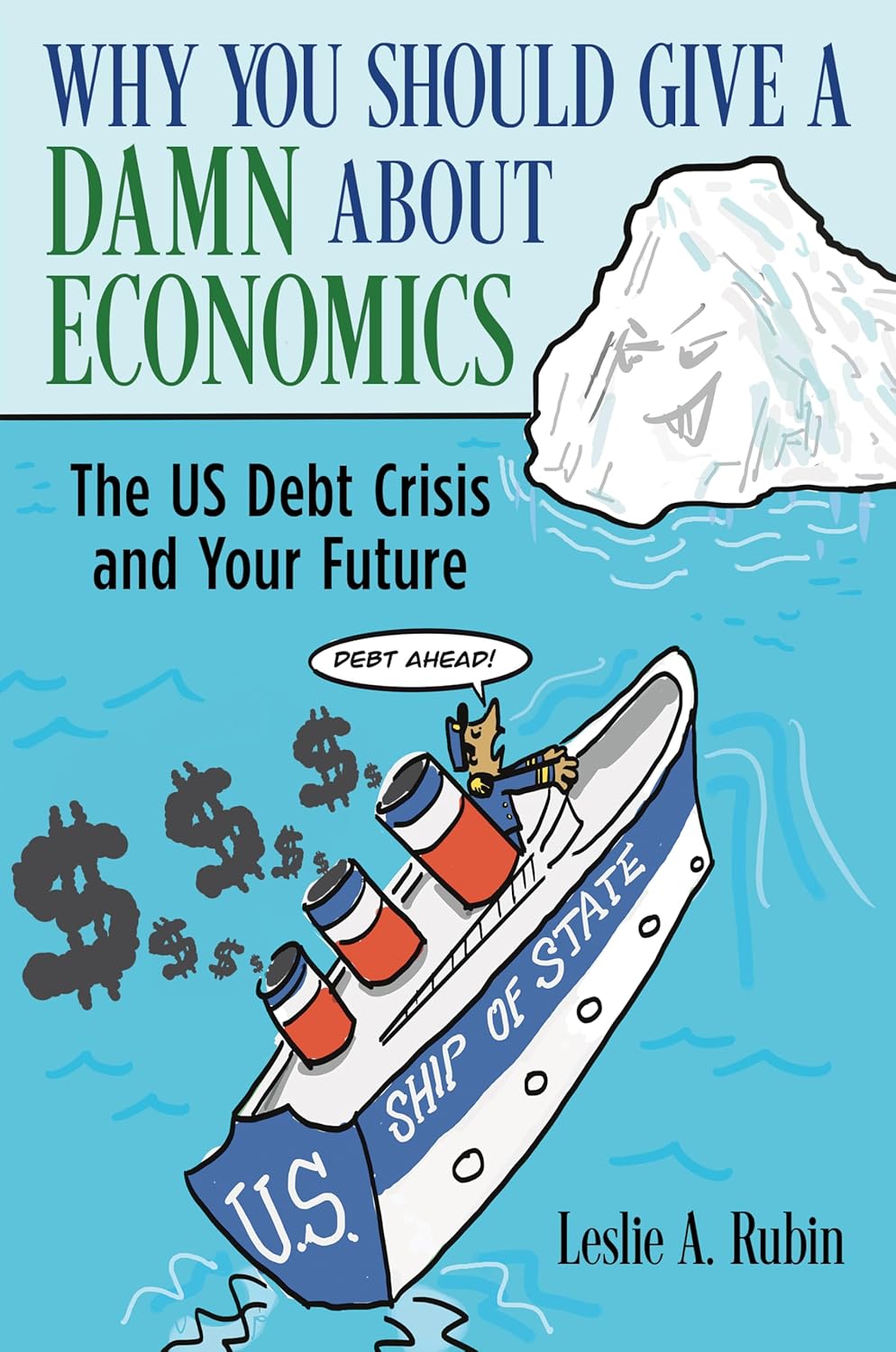
Why You Should Give a Damn about Economics: The Us Debt Crisis and Your Future
The Greatest Ponzi Scheme on Earth: How the US Can Avoid Economic Collapse
Stock Market Milestone Masks Escalating Federal Debt Risks
“The Dow crossing 50,000 is a remarkable milestone and a testament to American innovation, productivity, and economic resilience,” Rubin said. “But a strong market should not be confused with fiscal health.”
Equity markets have surged amid strong corporate earnings, technological innovation, and investor optimism. While growth is welcome and should be applauded, Rubin cautioned that soaring stock indices can also obscure deep and unresolved structural problems in the federal government’s financial situation.
“Stock market buoyancy can create a dangerous sense of complacency,” Rubin said. “Rising asset prices do not erase debt. They do not fund future obligations. And they do not substitute for responsible fiscal policy.”
According to Rubin, today’s market highs must be viewed alongside a federal debt load that now exceeds $38.5 trillion and continues to grow by multi-trillions of dollars each year. Unfunded liabilities associated primarily with Social Security and Medicare exceed $100 trillion, while trust funds supporting those programs are projected to be exhausted in less than 7 years.
“Our debt-to-GDP ratio now stands at roughly 125 percent, the highest in American history,” Rubin said. “We have had high ratios in the past, but it was always followed by fiscal restraint and a falling ratio. Not this time. Washington continues to spend lavishly and project persistent, multi-trillion-dollar deficits as far as the eye can see. This is not a cyclical issue. It is a structural one.”
Rubin emphasized that strong equity performance does not insulate the economy from the consequences of excessive borrowing. “When markets are rising and we are feeling confident, difficult decisions are easy to postpone,” Rubin said. “But debt doesn’t disappear during bull markets.”
Main Street Economics also warned that investors and everyday Americans should be cautious about interpreting stock market records as proof that underlying economic risks have been resolved.
“The stock market reflects confidence and liquidity, not long-term fiscal sustainability,” Rubin said. “A rising Dow does not guarantee that future generations will inherit a stable economy. If we continue the present path, our heirs will inherit a bankrupt country someday. That is just plain wrong.”
Rubin noted that Washington’s long-standing approach of borrowing to avoid tough choices has relied heavily on continued confidence in U.S. government debt which cannot be taken for granted indefinitely.
“If the next economic downturn arrives after our borrowing capacity has been exhausted, the choices will be far harsher than in any other downturn.,” Rubin said. “Severe austerity, financial depression, severe inflation, or some combination of all three become far more likely. These all have dire long-term consequences.”
Rubin stressed that the current moment still offers an opportunity to act responsibly, precisely because our fundamental economic growth remains strong.
“Strong markets and a strong economy provide breathing room, but if we are complacent and do not address our unsustainable fiscal problems, we will eventually pay the price, and it will not be pretty,” he said. “This is the time to address the drivers of our debt problem, not act as if the problem has been solved.”
Main Street Economics urges policymakers to resist complacency and use this period of economic strength to restore fiscal discipline, reform long-term entitlement obligations, and place the nation on a sustainable debt trajectory.
“Growth is good. Optimism is healthy,” Rubin said. “But optimism without discipline is how nations dig holes so deep, they will eventually fail. We cannot let that happen. Act now!”
About Main Street Economics
Main Street Economics was formed to provide Economic Education for the American public. We focus on explaining the fiscal problems we face and basic economics in easy-to-understand language by laymen for laymen without formal education in economics. For more information on Main Street Economics and its initiatives, please visit https://www.mainstreeteconomics.org/ and follow on X at @MainStreetEco.
To schedule an interview with Les Rubin, please contact Dan Rene at 202-329-8357 or dan@danrene.com.
Dan Rene
Dan Rene Communications
+1 202-329-8357
dan@danrene.com
Visit us on social media:
X
This Main Street Economics video contrasts the economic paths of Poland and Venezuela, starting in the 1990s. http://mainstreeteconomics.org/
Legal Disclaimer:
EIN Presswire provides this news content "as is" without warranty of any kind. We do not accept any responsibility or liability for the accuracy, content, images, videos, licenses, completeness, legality, or reliability of the information contained in this article. If you have any complaints or copyright issues related to this article, kindly contact the author above.
